Flat Roof Repair
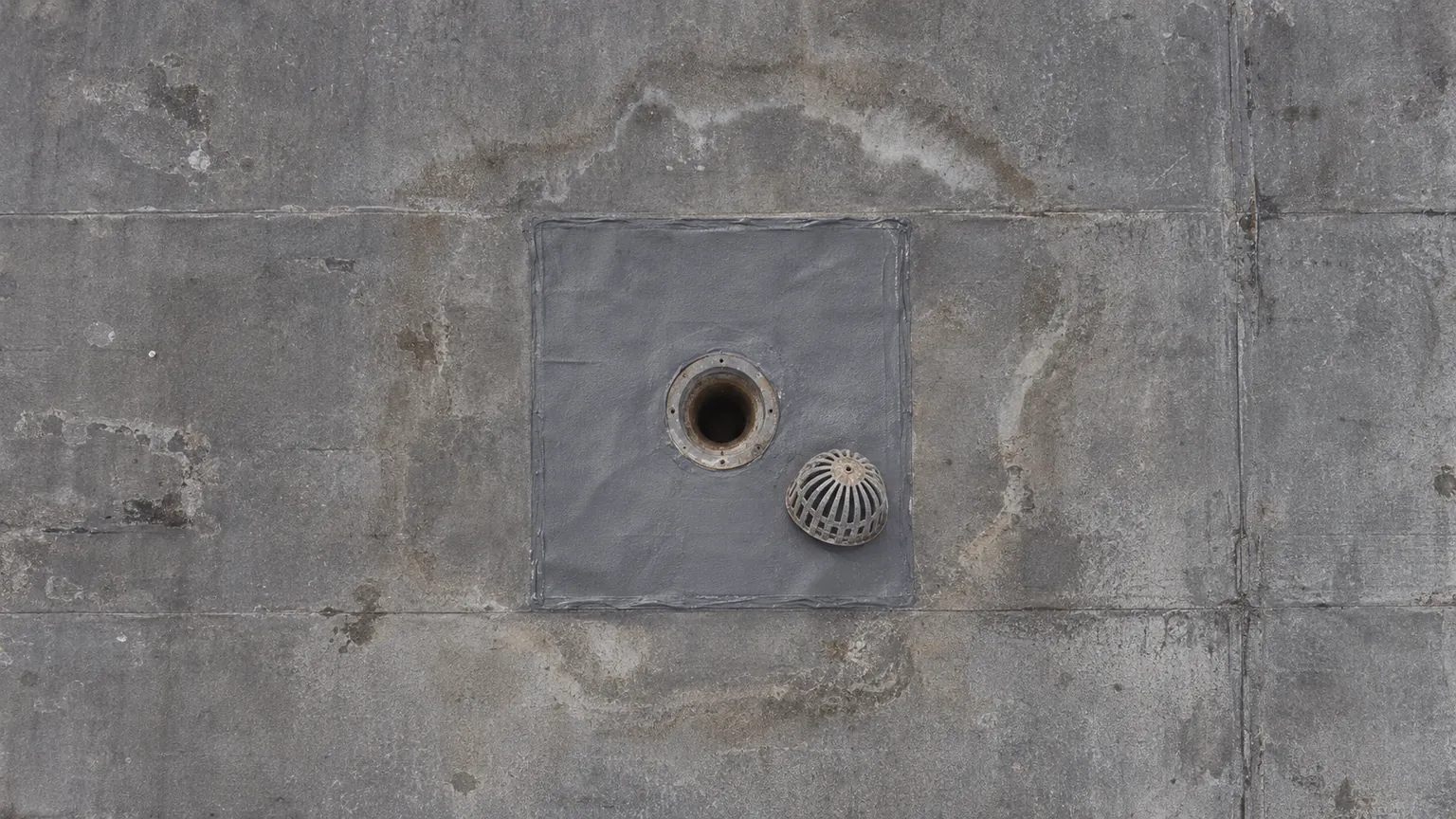
Membrane, built-up, and modified bitumen roofs with blisters, split laps, ponding at drains, or wet insulation under an old patch.
Flat roof repair details
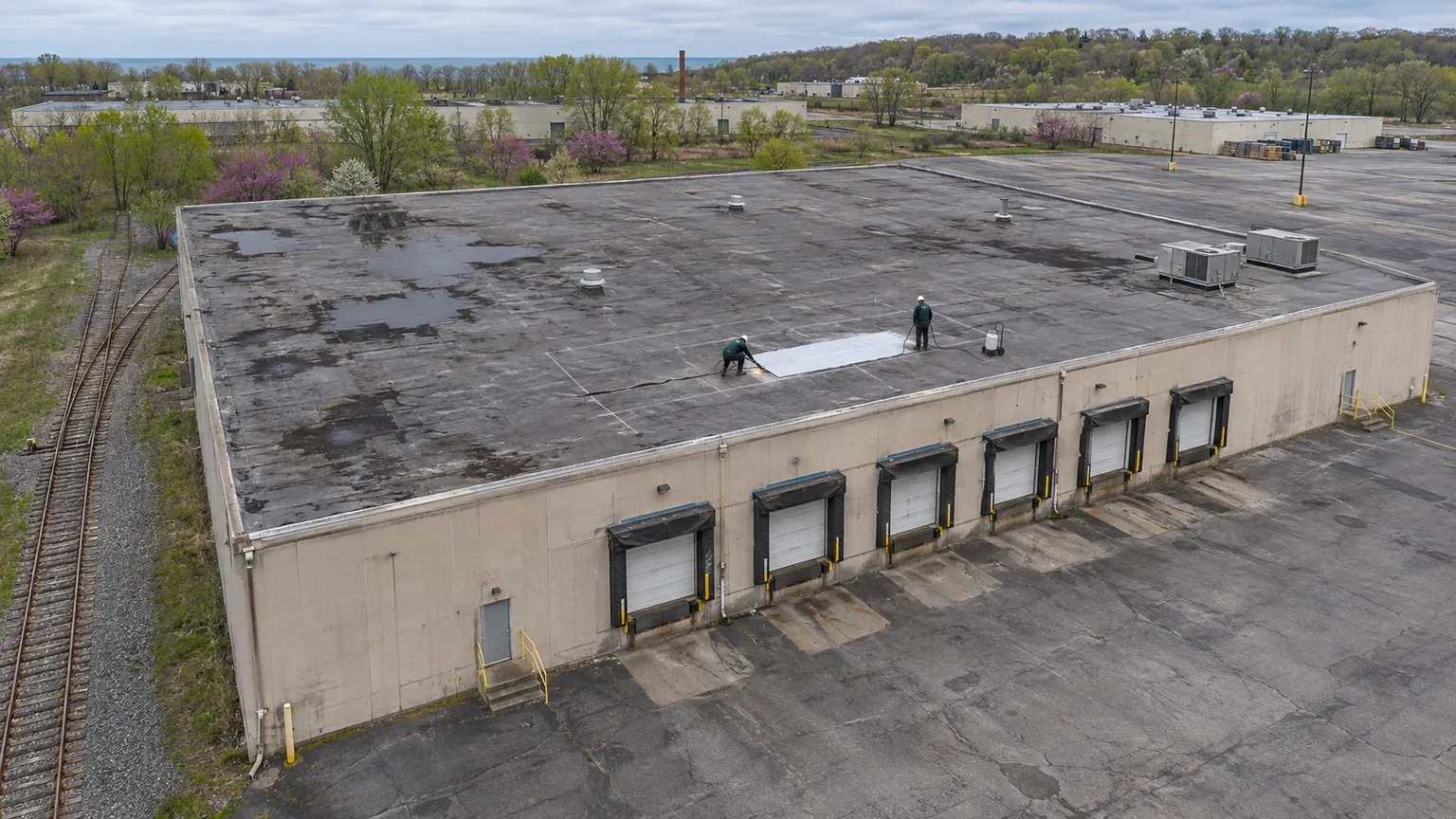
As an Erie commercial roof repair contractor, we trace leaks and repair flat, metal, and plant roofs across the city and five nearby towns.
Erie commercial roof repair here covers four kinds of work. The cards show what each repairs, and the table shows which buildings call for it most.
Membrane, built-up, and modified bitumen roofs with blisters, split laps, ponding at drains, or wet insulation under an old patch.
Flat roof repair details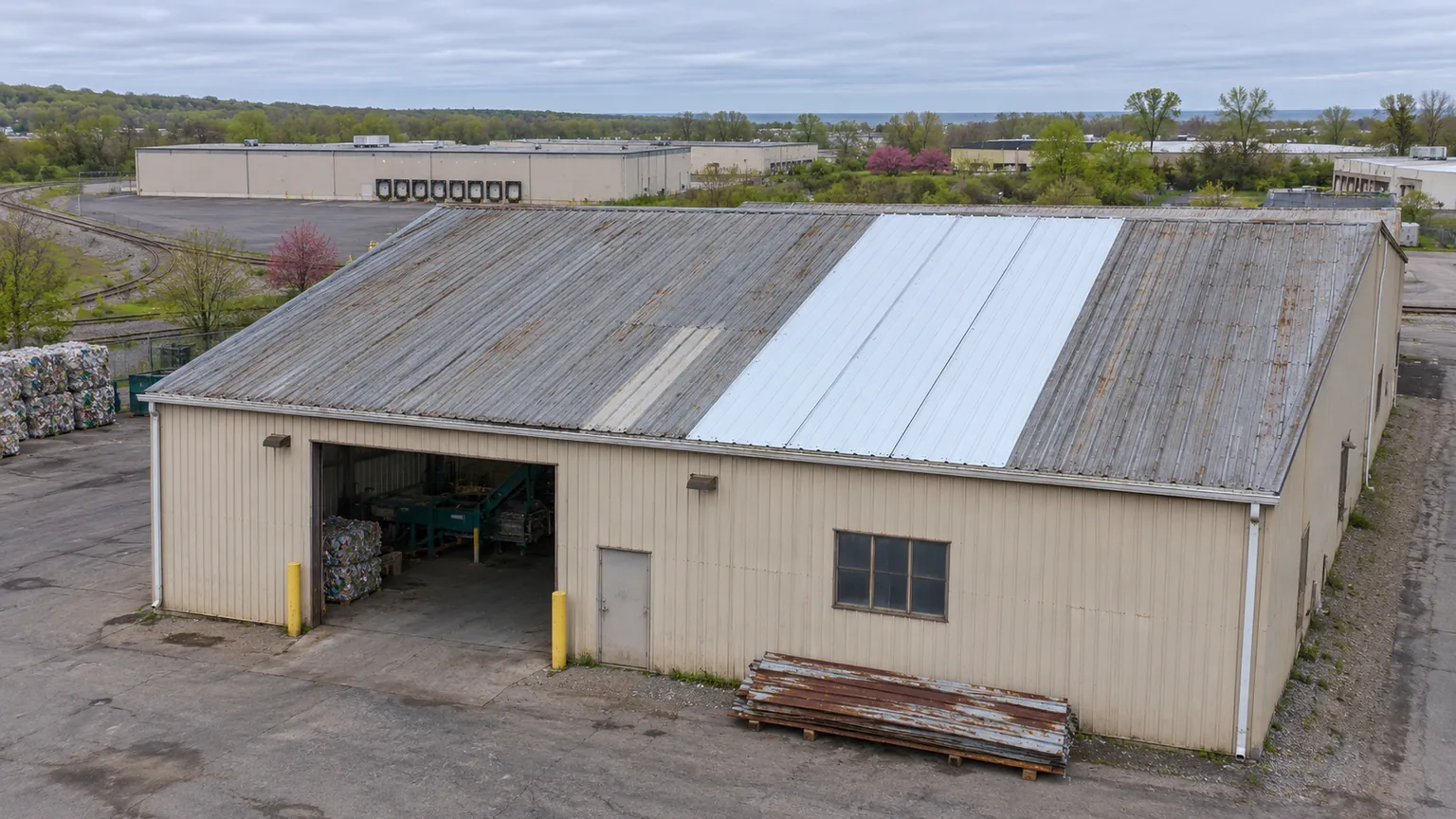
Ribbed and standing-seam panels with loose curb flashing, thinned metal at screw holes, hail-cracked seams, or rust along the eave.
Metal roof repair details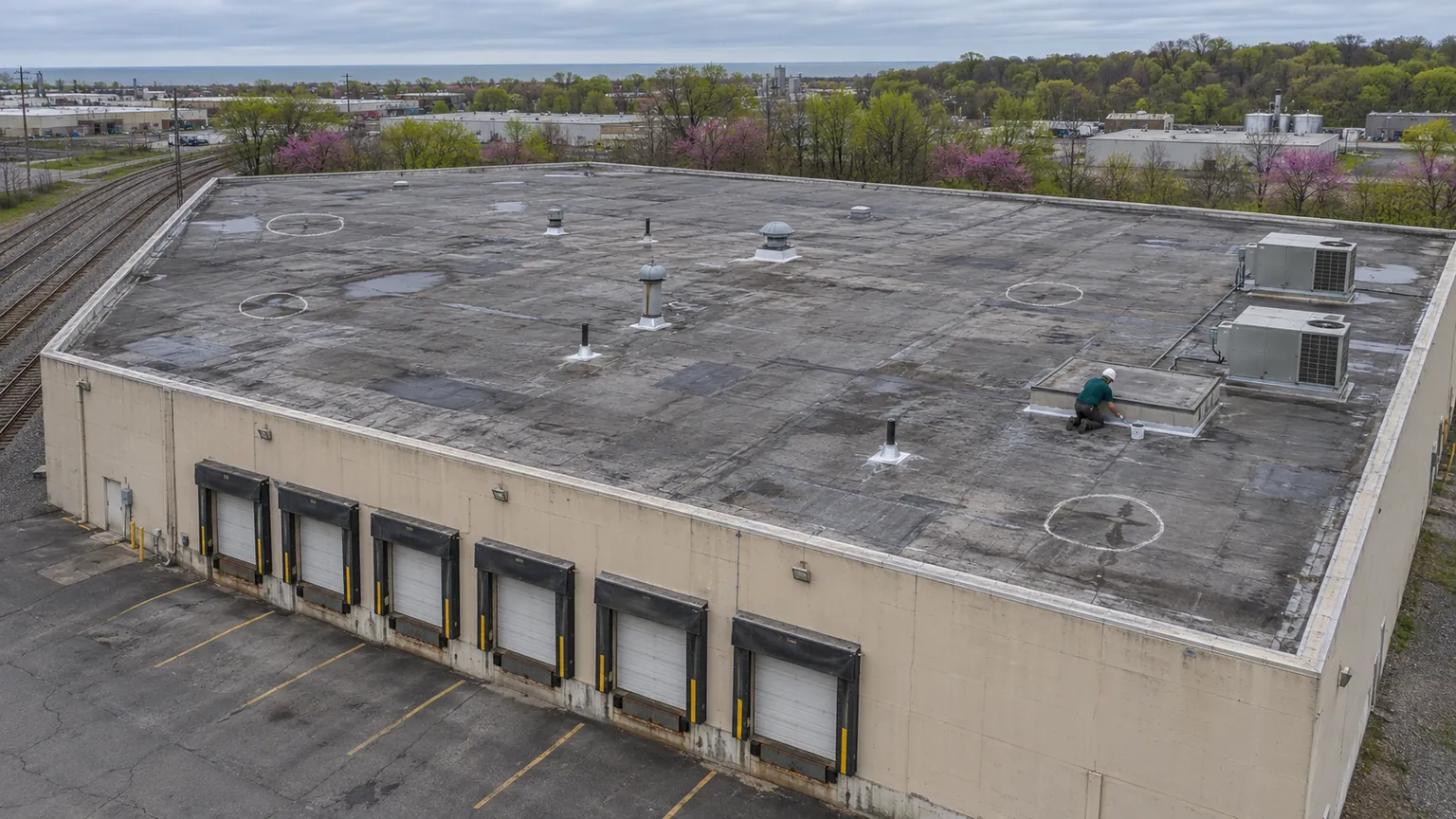
Drips that move with the weather: parapet caps, ice dams, heavy-rain overflow, and water traveling along framing above racks and docks.
Leak repair details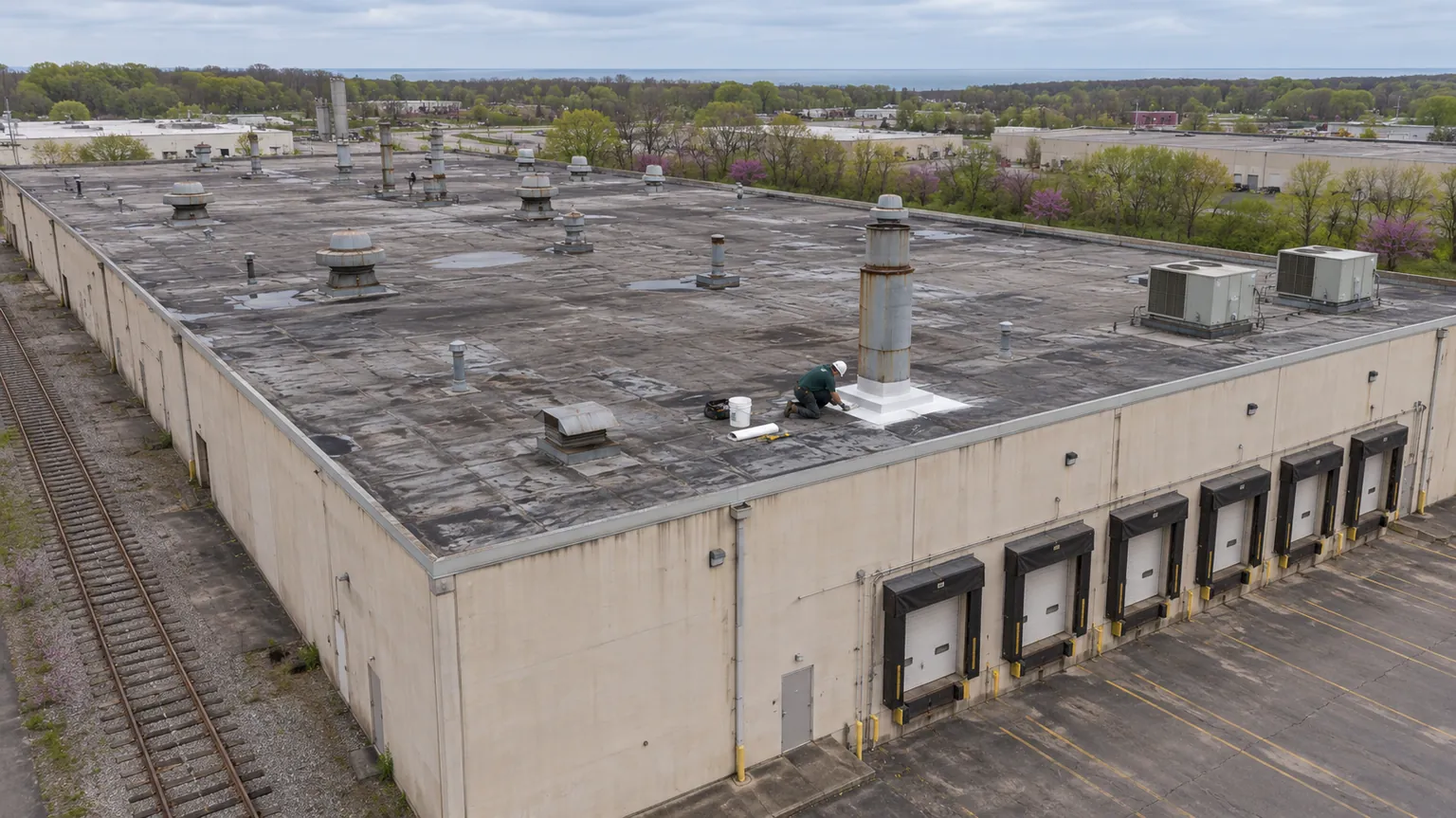
Plant roofs above production: exhaust fan curbs, rusted deck at drains, and sections opened in an order agreed with the facility.
Industrial repair details| Building Type | Flat Roofs | Metal Roofs | Leak Tracing | Industrial Roofs |
|---|---|---|---|---|
| Plastics Molding Plants | Outlet and seam repair | Curb flashing at openings | Rain-only leaks traced | Work staged over lines |
| Rail Equipment Plants | Ice-dam edge repair | Loose curb flashing | Roof and equipment water sorted | Drain and deck rebuilds |
| Port Warehouses | Low insulation at drains | Rust at eaves and laps | Parapet cap leaks | Rarely |
| Older Brick Plants | Patch joints after freeze-thaw | Rarely | Wall entry versus roof | Damp traced past repairs |
| Racked Storage Warehouses | Blisters by traffic paths | Thinned screw holes | Water traced past racks | Rarely |
Five steps, in the same order on every roof, from the first walk to the photo record.
We walk the roof with you or your facility manager and photograph each defect near the reported leaks.
Core cuts and moisture readings show how far water spread under the membrane and set the repair edge.
You get a written list of repairs, materials matched to your roof, and any areas left for later.
Wet insulation comes out, the deck is checked, and new material ties into dry roof on every side.
Finished details are water-checked where practical and photographed for your maintenance file.
Each failure below shows up on warehouse and plant roofs near the lake, paired with what the repair does about it.
Crushed insulation around an outlet holds water against the drain seal through every freeze.
New tapered board and a reset bowl move water into the drain and off the seal.
Patches laid over wet insulation keep a stain growing below long after the opening is sealed.
Cores mark the wet area, and that board comes out to the deck before new membrane goes on.
Sealant-only flashing at fans and units pulls free as equipment vibrates and panels move.
Flashing gets mechanically reattached to a stable curb, with sealant as a backup only.
Gaps at coping joints send water down behind the base flashing and into the wall.
Coping joints and base flashing are repaired together as one water path.
Lake-effect snow melts against edge laps and gutter connections and backs water under them.
Edge laps and gutter connections are rebuilt and wet insulation under them is replaced.
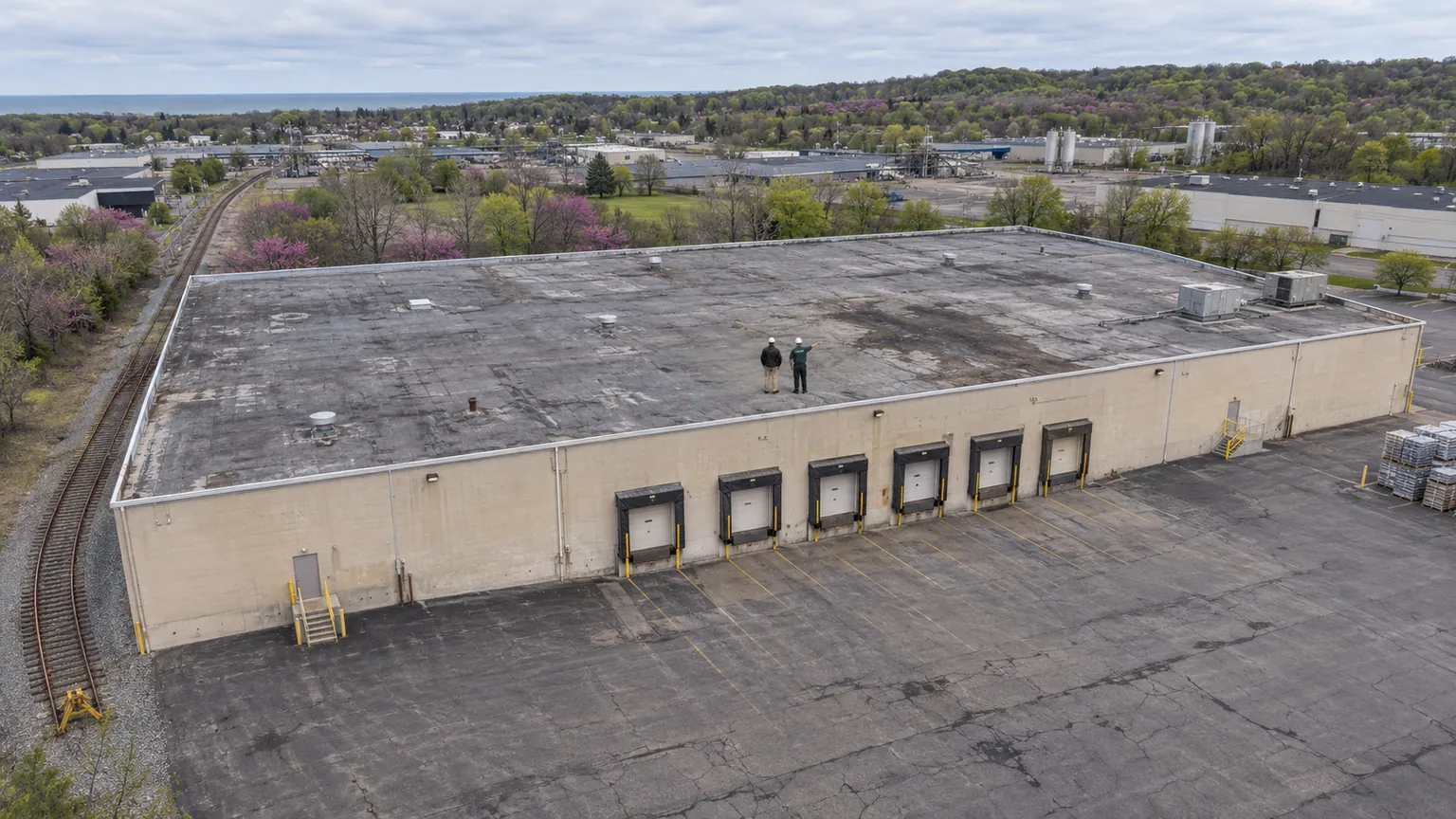
Call with the drip location and how the roof is reached. Safe access comes first, then a temporary seal where weather allows, then the full repair from what we find.
Call UsWhat shows up inside the building points to a short list of roof details. These pairs come up most often around the city.
Water lands on stock, molding presses, or an electrical room during a storm.
An opening at a curb, drain, or lap upslope; we set access, protect people, and seal it temporarily.
New drips show up a few days after a hail storm, usually near units or the ridge.
Cracked seams, split flashing, or a dented vent cap; marks on open membrane often stay dry.
Stains form at a column line after long rains and grow after each freeze.
Low insulation at a drain holds water against the outlet seal and nearby laps.
Older brick plant walls stay damp near the roof line after a repair.
Open coping or wall entry, or condensation inside, keeps feeding the damp spot.
Core results and the condition of the membrane decide how big the repair is. This is how the two sizes compare.
Price comes from the inspection: leak tracing, the roof system, the size and count of damaged areas, core results, flashing, drains, and access.
Plastics plants, rail shops, warehouses, and older brick buildings in these towns are where we repair roofs most. Outside them? Call us or send us a message.
Plastics molding plants, rail equipment shops, and port warehouses near the lake make up most of our work. Lake-effect snow, iced gutters, and freeze-thaw joints drive many of the repairs we plan here.
Commercial roof repair in ErieTooling and plastics plants change process piping often, which leaves old roof penetrations behind. We rebuild those openings with deck, insulation, and membrane instead of capping them.
Meadville commercial roof repairRoof hatches and access ladders on older commercial buildings see daily traffic from service techs. Water near a ladder often starts at worn membrane or a hatch curb above it.
Oil City commercial roof repairMany roofs carry layers of past patches made from whatever was on hand. We identify the original system and remove patch material that never stuck to the roof.
Warren commercial roof repairOwners planning a larger replacement often need the roof held in working order for a while first. We stage repairs and spell out what each stage covers and what it leaves.
Corry commercial roof repairWarehouses with tenant equipment on the roof need the owner and tenant working from one plan. We describe the defect and the repair so both sides can schedule access and equipment work.
Franklin commercial roof repairShort answers on planning a repair and on how Erie winters affect it. Every question also sits on the FAQ page.
Note when the storm hit and where you see marks or leaks, then arrange a safe inspection. We record each defect and sort surface marks from damage that needs repair. Your policy and the cause of damage decide coverage, so the findings support that conversation without predicting the outcome.
Safe access and protecting the people and operations below. We find the immediate water path and check conditions before choosing a temporary measure. That measure cuts exposure, and the permanent repair still follows an investigation of the defect and any wet roof layers.
The inspection on the roof. We look at leak tracing, the roof system, how many areas are damaged and how large, core cuts for wet insulation, flashing, drains, and access. The scope explains those findings, so the price reflects the roof instead of the stain inside.
Leak locations, equipment restrictions, and how the roof is safely reached. Timing, recent roof service, and any records of the roof layers help too. Those details aim the inspection, and the repair itself is based on what turns up on the roof and in the layers below.
Yes. Freeze-thaw cycles open joints where moisture or movement sits under an old patch. We check the patch bond and the connection beneath it before proposing work, and the next repair corrects that joint instead of covering it with a bigger patch.
Protect the affected interior with your own procedures while safe access is assessed. Heavy wet snow and visible sagging call for a structural evaluation before anyone goes up. A known leak spot says nothing about whether the roof above it is safe to walk.
They can. Ice at the gutters exposes roof edges during the melt, and water held in the roof keeps dripping afterward. We inspect the gutter connection and check the roof layers for moisture, so the repair covers the damaged edge and any wet material.
Water trapped in the roof layers, condensation, or water coming through the wall can keep the area damp. We compare our repair findings with indoor humidity and the next few weather events before deciding whether the roof is the source again.
Tell us where the water shows and how the roof is reached. We walk it, core it, and repair it.